bandeira

Troubleshooting Guide for 5 Common Magnetic Separator Problems

Oct 15, 2026
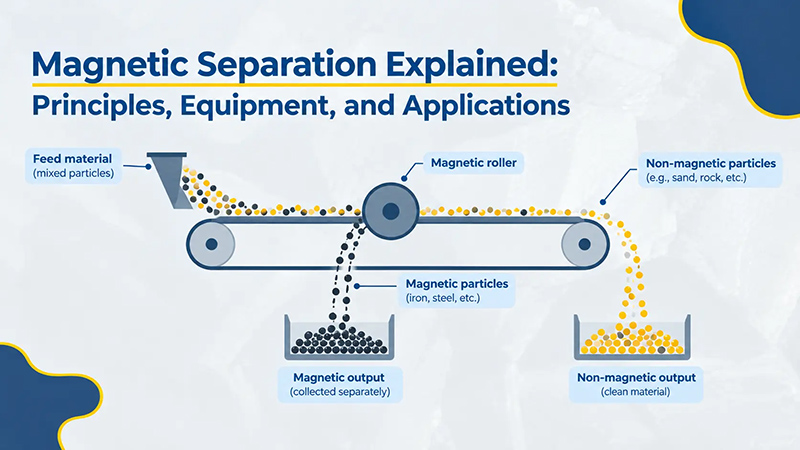
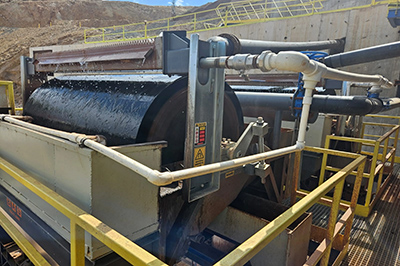
Magnetic separators are core equipment in industries such as mineral processing, ceramics, quartz sand purification, and recycling. Although their structure appears simple—essentially a magnetic assembly plus a drum—"small malfunctions, big losses" is a familiar reality on site: a single blockage can wipe out half a day's production, while demagnetization can ruin an entire batch of concentrate.
This article covers the five most common problems encountered during magnetic separator operation, breaking each down step by step from symptoms and causes to troubleshooting procedures. Whether you are an operator, maintenance technician, or plant manager, this checklist is worth keeping at hand.
 
magnetic separator
 

Problem 1: Low Concentrate Grade and Losses to Tailings (Reduced Recovery)

Symptoms: A noticeable increase in magnetic impurities in the concentrate, or an excessive amount of magnetic material reporting to the tailings instead of being recovered.
Common Causes:
  1. Magnetic system demagnetization — permanent magnets lose field strength after prolonged exposure to high temperatures or severe vibration.
  2. Excessive feed rate or slurry density — magnetic particles are swept away by the water flow before they can be captured.
  3. Increased pole-to-shell gap — as the cylinder shell wears, the field strength at the separation zone drops off sharply with distance.
  4. Changes in slurry pH or reagent regime — affecting the magnetic flocculation and capture of particles.
Troubleshooting Steps:
  • Measure the pole surface field strength with a gaussmeter and compare it with the factory baseline. A drop exceeding 10%–15% generally calls for maintenance or re-magnetization.
  • Check whether the feed rate and slurry density exceed design values. Start by verifying performance under the most stable operating conditions, then increase throughput gradually.
  • Shut the machine down to inspect shell wear and measure the pole-to-shell gap.
  • Review recent process parameter changes for any relevant adjustments.
Prevention: Conduct a full field-strength survey every quarter and keep a running record correlating field strength, throughput, and product grade.
 

Problem 2: Abnormal Drum Speed or Complete Jamming

Symptoms: The drum speed fluctuates erratically, runs well below the rated value, or seizes up entirely.
Common Causes:
  1. Low oil level or degraded lubricant in the reducer (gearbox).
  2. Loose or slipping drive belt (on belt-driven models).
  3. Bearing starvation or slurry ingress causing seizure.
  4. Scale buildup or large foreign objects obstructing the drum interior.
Troubleshooting Steps:
  • Perform a no-load start: if the drum runs freely unloaded but jams under load, the problem is almost always on the load side—scale, foreign objects, or excessive feed.
  • Check the reducer oil level and condition. If the oil is black or contains metal particles, change it immediately and inspect the gears.
  • On belt-driven models, check belt tension—it should deflect roughly 10–15 mm under moderate thumb pressure.
  • Strip down the bearing housings for inspection. Any bearing contaminated with slurry must be replaced outright, and its sealing arrangement improved.
Prevention: Follow the lubrication schedule in the equipment manual rigorously; in dusty, wet plant environments, shorten the lubrication intervals by about 30%.
 

Problem 3: Blockage (Poor Feed Flow or No Concentrate Discharge)

Symptoms: Overflow at the feed box, no material discharging from the concentrate hopper, or ore accumulating at the bottom of the drum.
Common Causes:
  1. Oversized feed particles lodging in the tank.
  2. Excessive slurry density and sluggish flow, allowing magnetic particles to settle out and accumulate.
  3. Blocked concentrate flushing-water lines or insufficient water pressure.
  4. A damaged feed screen, letting debris (wood chips, woven-bag fibers, welding slag) into the tank.
Troubleshooting Steps:
  • Stop the feed and flush the circuit with clean water first, observing where the blockage is located.
  • Check the flushing-water pressure (typically above 0.2 MPa—consult the manual for your model) and inspect the nozzles for scale.
  • Inspect the upstream screen/scalping screen for damage.
  • Investigate whether prolonged low-volume operation has caused gradual buildup—running at a continuous trickle causes more accumulation than sustained overload.
Prevention: Fitting a debris screen and a sight glass on the feed line is the cheapest and most effective anti-blockage measure you can take.
 
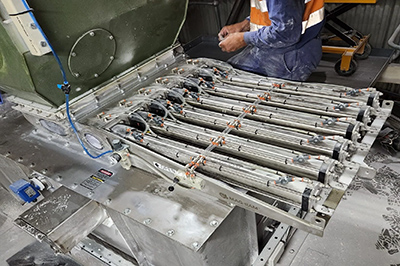
magnetic separatormagnetic separator


Problem 4: Coil Overheating and Abnormal Current (Electromagnetic Models)

Symptoms: Excessive coil temperature rise, protective tripping, or operating current exceeding the rated value or fluctuating widely.
Common Causes:
  1. Cooling system malfunction—low water pressure, insufficient flow, or excessively high cooling-water temperature (water-cooled models).
  2. Coil insulation aging or a partial short circuit.
  3. Grid voltage fluctuations or a faulty rectifier cabinet.
  4. Sustained over-flux operation beyond the design field-strength limit.
Troubleshooting Steps:
  • Immediately verify the cooling-water flow and the temperature differential between inlet and outlet. If water temperature is abnormal, check the pump and piping first.
  • Use a clamp meter to compare the three-phase currents. Stop the machine for inspection if the imbalance exceeds 5%.
  • Measure the coil's insulation resistance to ground with a megohmmeter. A marked drop indicates moisture ingress or insulation aging.
  • Inspect the rectifier cabinet—check the silicon power components and the trigger board.
Prevention: Bring coil temperature, current, and cooling-water flow into the DCS alarm system rather than relying on manual rounds alone.
 

Problem 5: Excessive Noise and Vibration

Symptoms: Periodic abnormal noise, hot bearings, or loose foundation bolts.
Common Causes:
  1. Bearing wear or raceway pitting (the most common cause).
  2. Drum imbalance due to localized shell wear or liner detachment.
  3. Coupling misalignment or loose fasteners.
  4. Reducer gears reaching an advanced wear stage.
Troubleshooting Steps:
  • Use a listening rod (or press a screwdriver handle to your ear) to isolate the noise source—bearings, reducer, or coupling.
  • Check bearing temperature: normal operation should not exceed ambient temperature +40 °C.
  • Inspect the shell for uniform thickness and any localized dents.
  • Re-align the coupling and check concentricity.

Prevention: Noise and vibration are the most honest "alarms" a machine can give—the transition from quiet to noisy operation usually unfolds over several weeks. A simple daily inspection log will help you catch the optimal maintenance window.


More than 80% of magnetic separator malfunctions come down to three root causes: degraded magnetic performance, mechanical wear, and process upsets. Effective troubleshooting is not about treating symptoms in isolation—it means working down the chain of "symptom → location → parameter → root cause."

Even the most advanced magnetic separators depend on disciplined basic maintenance. Get three things right—regular field-strength checks, scheduled lubrication, and pre-screening the feed to remove debris—and you will prevent the vast majority of unplanned downtime. Equipment cannot speak, but every abnormal signal it sends deserves your full attention.

Deixe um recado

Deixe um recado
Se você está interessado em nossos produtos e deseja saber mais detalhes, deixe uma mensagem aqui, responderemos o mais breve possível.
enviar
CONTATE-NOS #
+86 -13559234186

Nosso horário

Seg, 21/11 - Quarta, 23/11: 9h - 20h
Qui, 24/11: fechado - Feliz Dia de Ação de Graças!
Sexta-feira, 25/11: 8h - 22h
Sábado, 26/11 - Dom, 27/11: 10h - 21h
(todos os horários são horário do leste)

Lar

Produtos

whatsApp

contato