-

Envie-nos um e-mail
sale@lscmagnetics.com -

Número de contato
+86 -13559234186
Envie-nos um e-mail
sale@lscmagnetics.comNúmero de contato
+86 -13559234186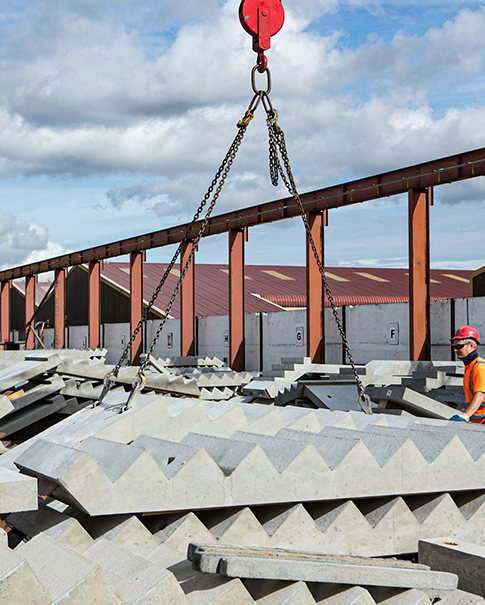

Na indústria de concreto pré-moldado, a pureza não é mais apenas uma métrica de limpeza — ela afeta diretamente a resistência estrutural, a durabilidade e o acabamento da superfície. Um painel de parede pré-moldado que enferruja e racha devido a limalhas de ferro dispersas, ou equipamentos de produção danificados por detritos metálicos, pode resultar em perdas financeiras significativas. Separadores magnéticosOs separadores magnéticos, que atuam como "limpadores" na etapa de pré-tratamento de agregados, desempenham um papel muito mais crítico do que muitos imaginam. Neste artigo, exploraremos como as tecnologias de triagem em múltiplos estágios e controle inteligente permitem que os separadores magnéticos protejam a pureza do concreto pré-moldado.
A cadeia de suprimentos de matéria-prima para concreto pré-moldado está se tornando cada vez mais diversificada, principalmente com o crescente uso de agregados reciclados. Grandes volumes de resíduos de construção e demolição são triturados e reinseridos na produção. No entanto, esses materiais frequentemente contêm uma série de contaminantes indesejáveis: tocos de vergalhão, pregos, parafusos e até mesmo ferrugem proveniente da trituração. Uma vez que essas impurezas ferromagnéticas entram no sistema de mistura, as consequências se multiplicam.
Primeiramente, os contaminantes de ferro podem se expandir com o tempo, criando pontos de concentração de tensão dentro do concreto que eventualmente levam a fissuras e comprometem a segurança estrutural. Em segundo lugar, esses fragmentos de metal duro aceleram o desgaste das pás da betoneira, tubulações transportadoras e britadores, aumentando os custos de manutenção. Talvez o efeito mais visível seja o de partículas de ferro incrustadas na superfície de um elemento pré-moldado acabado, que irão prejudicar as aplicações subsequentes de pintura ou revestimento, diminuindo diretamente a qualidade estética do produto. Por todos esses motivos, uma etapa eficiente de separação magnética antes que o agregado chegue à tremonha de dosagem é absolutamente essencial.
Aumentar a pureza não é tão simples quanto pendurar um ímã sobre uma esteira transportadora. O posicionamento e a configuração dos separadores magnéticos determinam diretamente o resultado final e devem ser adaptados à escala de produção e às metas de pureza.
1. Separação pré-tratamento na fonte
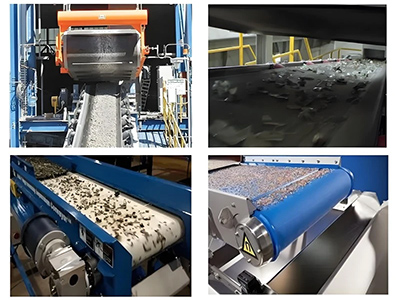
Na maioria das linhas de produção bem projetadas, o separador magnético é posicionado imediatamente após a britagem primária. Os resíduos de construção a granel são grosseiramente reduzidos por um britador de mandíbulas e, em seguida, transportados para um separador magnético suspenso ou de tambor. Essa configuração extrai rapidamente barras de aço e pedaços de ferro maiores, impedindo que cheguem aos equipamentos de britagem fina subsequentes. Isso serve não apenas como purificação, mas também como a primeira camada de proteção para máquinas caras, como britadores cônicos e máquinas de fabricação de areia VSI.
2. Separação Magnética Multiestágios e Gradientes
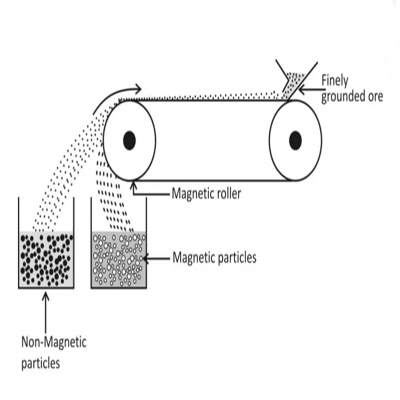
Fabricantes de pré-moldados de alta qualidade estão abandonando a separação em estágio único em favor de sistemas de gradiente em múltiplos estágios. Ao implantar equipamentos com campos magnéticos progressivamente mais fortes, um separador de campo fraco remove inicialmente as partículas grossas fortemente magnéticas, enquanto uma unidade de alta intensidade subsequente captura impurezas fracamente magnéticas (como certos óxidos de ferro). Na prática, a combinação de um separador magnético permanente tipo tambor com um ímã de placa, e até mesmo a introdução de um separador magnético de anel vertical de alto gradiente de 1,3T a 1,5T, pode reduzir os níveis de contaminantes de ferro para a faixa de partes por milhão — atendendo às especificações mais exigentes de consistência de cor e pureza em concreto de alta qualidade. Quando combinado com um classificador de ar, o sistema também pode remover detritos leves, como plásticos e lascas de madeira, garantindo que o agregado atenda a todos os padrões de qualidade.
3. Funções inteligentes de intertravamento e autolimpeza
As frequentes interrupções na produção para a limpeza manual do material ferroso retido não são mais aceitáveis. Os modernos separadores magnéticos são equipados com recursos inteligentes de monitoramento, como sensores de fluxo magnético que rastreiam a carga acumulada nos elementos magnéticos. Quando a saturação é detectada, o sistema aciona automaticamente um ciclo de limpeza — levantando, girando, desenergizando (no caso de eletroímãs) e raspando os detritos coletados — sem interromper a produção. Essa operação contínua e automatizada garante a remoção consistente do ferro, preservando a alta produtividade da linha de pré-moldados de concreto.
Vale ressaltar que os separadores magnéticos raramente funcionam isoladamente. Para elevar a pureza a um novo patamar, eles precisam cooperar com outras tecnologias de separação em um sistema bem orquestrado.
Para matérias-primas mistas de tijolo e concreto, uma abordagem eficaz segue a sequência: britagem e peneiramento → separação magnética → classificação por cor + separação por densidade. Em detalhes:
O separador magnético entra em ação, removendo todas as frações metálicas.
Um analisador de densidade separa então os componentes leves dos pesados com base na diferença de densidade entre o tijolo e o concreto.
Um classificador de cores finaliza o trabalho, distinguindo partículas de concreto de partículas de tijolo com base em diferenças de cor visíveis.
Por meio desse processo, o agregado graúdo de concreto reciclado pode atingir níveis de pureza adequados para misturas de concreto de alta resistência, com a eliminação eficaz das impurezas dos tijolos. Para os produtores de pré-moldados, isso significa que, mesmo utilizando matérias-primas recicladas, a consistência e o desempenho podem se aproximar dos agregados virgens.
| Área de Benefício | Impacto específico |
| Pureza do produto | Remove com eficiência os contaminantes ferromagnéticos, mantendo o teor de metal no produto final abaixo de 0,1 ppm e eliminando defeitos superficiais causados por pontos de ferrugem. |
| Proteção de Equipamentos | Impede a entrada de partículas metálicas estranhas em britadores, moinhos e prensas de rolos, reduzindo significativamente o desgaste e o tempo de inatividade não planejado. |
| Controle de custos | Reduz os custos de manutenção, prolonga a vida útil do revestimento e da mídia filtrante; a limpeza automatizada também reduz os custos de mão de obra. |
| Rastreabilidade da Qualidade | Permite o registro completo da pureza do produto quando utilizado com detectores de metais, possibilitando a certificação de componentes pré-fabricados de alta qualidade. |
| Segurança de Processos | Elimina o risco de faíscas causadas por fragmentos de metal — especialmente útil em ambientes com muita poeira. |
| Fase de Produção | Tipo de equipamento recomendado | Parâmetros de seleção de chaves |
| Correia transportadora de agregados graúdos | Placa magnética suspensa / Separador eletromagnético | Largura da correia, profundidade da camada de material, velocidade da correia |
| Calha de transferência | Separador de Tambor Magnético (MBZ) | Produtividade, tamanho das partículas, resistência à abrasão |
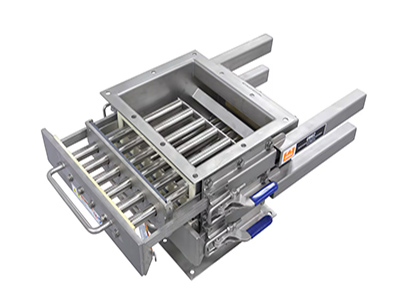
| Alimentação com pó (ex.: cimento, cinzas volantes) | Grade Magnética (MSS-MC/MSS-AC) | Fluidez do pó, método de limpeza |
| Pós pegajosos (ex: cal hidratada) | Separador Magnético Rotativo (MSR-MC) | Design anti-ponteamento, disposição das hastes |
| Processamento de agregados reciclados | Ímã suspenso + Separador de correntes parasitas | Tipo de metal, umidade de alimentação |
| Etapa final de embalagem | Detector de metais | Sensibilidade de detecção, velocidade de resposta |
Na busca atual por maior qualidade e produção mais sustentável de concreto pré-moldado, os separadores magnéticos evoluíram muito além de simples "removedores de ferro" — agora são equipamentos essenciais para a purificação de agregados. De um único ímã suspenso a sistemas de gradiente multiestágio, e até a integração completa com classificação por ar, peneiramento por densidade e triagem óptica, a sofisticação do seu circuito de separação magnética influencia diretamente a qualidade interna e externa da sua produção de pré-moldados. Se você está enfrentando problemas com excesso de ferro na sua matéria-prima ou com aparência superficial insatisfatória nos seus produtos acabados, analise mais atentamente o seu estágio de separação magnética. Essa etapa aparentemente simples pode ser a chave para alcançar um novo patamar de pureza na sua operação de concreto pré-moldado.
Whatsapp : +86 -13559234186
E-mail : sale@lscmagnetics.com
Telefone : +86 -13559234186