
-

Envie-nos um e-mail
sale@lscmagnetics.com -

Número de contato
+86 -13559234186
Envie-nos um e-mail
sale@lscmagnetics.comNúmero de contato
+86 -13559234186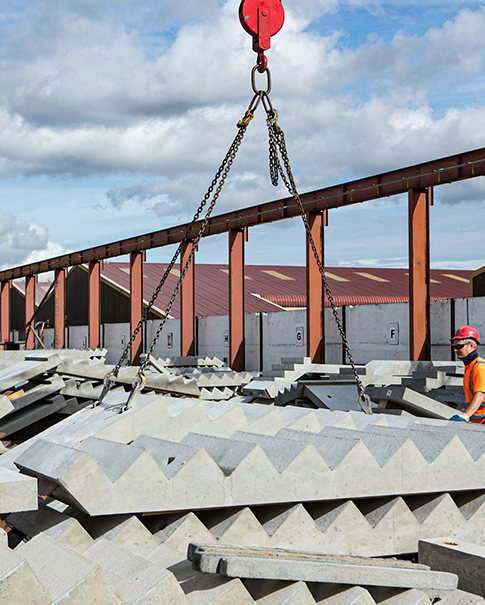

Âncora de içamento versus laço de içamento: qual é o mais seguro para concreto pré-moldado?
May 07, 2026Ao içar componentes pré-fabricados de concreto, a seleção dos pontos de ancoragem corretos é a etapa mais crítica para garantir a segurança na construção. Atualmente, os dois produtos mais utilizados no setor são os ganchos de içamento embutidos e as âncoras de içamento embutidas. Os ganchos se assemelham a um gancho de vergalhão embutido no concreto, enquanto as âncoras se parecem com um parafuso grande com cabeça. Embora ambos possam ser usados para içar componentes, eles diferem significativamente em termos de desempenho de segurança, cenários de aplicação e riscos potenciais. Este artigo explora essas diferenças em detalhes para ajudá-lo a tomar decisões de segurança informadas em projetos reais.
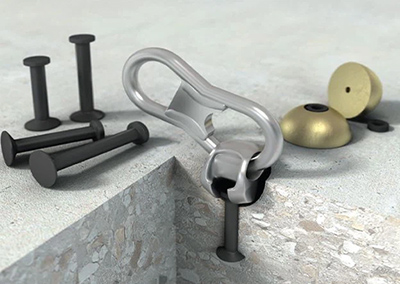
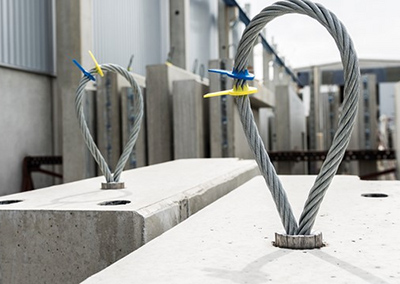
Alça de elevação embutida– Uma âncora de içamento feita de barra de aço redonda simples ou arame dobrado em forma de anel e pré-embutido no concreto antes da concretagem. Após o endurecimento do concreto, o anel se engata mecanicamente com o concreto e transfere a força de içamento para o componente. Essa tecnologia tem uma longa história e construção simples, sendo amplamente utilizada em construções pré-fabricadas e obras de engenharia civil na China. Muitos projetos ainda especificam anéis de içamento como pontos de içamento padrão.
Principais características:
Encaixe permanente – permanece no concreto, não removível.
Alta capacidade de carga – faixa típica de 10.000 a 100.000 lb (aproximadamente 4,5 a 45 toneladas), ou até mesmo superior.
Alto fator de segurança – falha do aço: ≥3,0; falha do concreto: ≥2,5 (típico)
Âncora de elevação embutida– Um componente de elevação especializado na moderna tecnologia de pré-fabricados. Exemplos típicos incluem ancoragens de elevação com cabeça redonda (com uma cabeça forjada para engate e uma ancoragem na extremidade para transferência de carga), ancoragens de elevação roscadas (com um tubo de aço roscado que aceita uma ferramenta de elevação com rosca externa) e ancoragens de elevação planas (feitas de chapa de aço com um dispositivo anti-desengate por pino rotativo). Independentemente do tipo, a característica comum é uma estrutura de ancoragem na extremidade que transfere as cargas profundamente no concreto por meio de ancoragem mecânica, em vez de depender apenas da aderência entre a armadura e o concreto.
Principais características:
Conexão temporária – instalada apenas para içamento, removível e reutilizável após o término do trabalho.
Posicionamento flexível – o ângulo e a posição de içamento podem ser ajustados dentro da faixa permitida da manga.
Reutilizável – a mesma âncora pode ser usada em vários componentes.
| Dimensões de comparação | Âncora de elevação | Alça de elevação |
| Capacidade de carga típica | 10.000 a mais de 100.000 libras | Típico < 35.000 libras |
| Fator de segurança contra falhas do aço | γ = 3,0 (seção sólida) | γ ≥ 4,0 (cabo de aço) |
| Fator de segurança contra falhas do concreto | γ = 2,5 | Depende da luva e da ancoragem em concreto. |
| Principais modos de falha | Ruptura, arrancamento e fissuração de cones de concreto | Ruptura do cabo de aço, arrancamento da luva, rachadura do concreto |
Âncora de elevação – vantagens de segurança:
Sem risco de montagem – nenhuma instalação no local é necessária após a pré-embutimento, eliminando erros humanos (como afrouxamento ou incompatibilidade de rosca).
Resistente à vibração – não se solta devido à vibração do veículo ou à oscilação da carga durante o transporte.
Requisito claro de resistência do concreto – as especificações normalmente exigem resistência do concreto ≥15 MPa antes do içamento.
Alça de içamento – riscos de segurança:
Risco de afrouxamento – se parafusos de retenção ou pinos de liberação rápida não forem usados, o anel de elevação pode deslizar para fora da manga devido à vibração.
Risco de corrosão – após a desmontagem, o cabo de aço fica exposto ao ambiente e propenso à ferrugem. Se não for cuidadosamente inspecionado antes da reutilização, pode romper-se repentinamente devido à redução da seção transversal causada pela corrosão.
Sensibilidade ao ângulo – o içamento em ângulo causa atrito entre o cabo de aço e a borda da luva, acelerando o desgaste.
Dê preferência a âncoras de elevação embutidas quando:
Os componentes são pesados (por exemplo, uma única peça com mais de 6 toneladas) e exigem alta resistência à tração e à ruptura no ponto de içamento.
O levantamento em múltiplos ângulos é necessário durante a desmoldagem, inversão e transporte.
Componentes de paredes finas ou distâncias de borda limitadas estão envolvidos (as âncoras oferecem maior adaptabilidade).
Você deseja a redundância de segurança das normas europeias (fator de segurança da ancoragem ≥3)
O projeto exige alta velocidade de elevação – sistemas de engate rápido (como ganchos tipo bico de pato) melhoram significativamente a eficiência.
Considere levantar as alças quando:
O componente é pequeno e leve (por exemplo, <2 toneladas) – os laços são mais econômicos
Os pontos de elevação são permanentes e não requerem uso frequente ou repetido.
O projeto é extremamente sensível aos custos e todos os projetos, cálculos e testes de materiais são rigorosos.
O laço é moldado integralmente com a gaiola de reforço principal e não há condições de controle de tensão lateral.
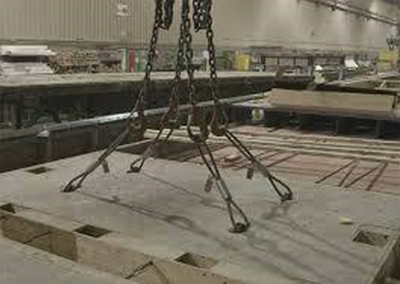
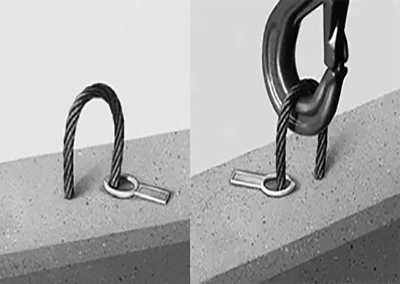
As âncoras de elevação são mais seguras em termos de capacidade de carga absoluta e confiabilidade a longo prazo, tornando-as a escolha preferida para componentes pré-fabricados pesados e conexões permanentes. Seus modos de falha são previsíveis e não são afetados por erros humanos de instalação.
Os olhais de elevação são igualmente seguros quando usados corretamente e mantidos adequadamente, oferecendo vantagens em termos de flexibilidade e economia. No entanto, seus riscos de segurança decorrem principalmente do desgaste e da corrosão durante o uso repetido, bem como da necessidade de uma instalação correta no local.
Três linhas de segurança – independentemente do tipo de âncora que você escolher:
① Levante o concreto somente após ele atingir a resistência necessária.
A resistência insuficiente do concreto na fase inicial é uma das causas mais comuns de falha no ponto de içamento. O primeiro içamento de um componente pré-moldado só deve ser realizado quando o concreto atingir pelo menos 15–20 MPa, ou o valor mínimo especificado na documentação técnica da âncora. Resistência insuficiente significa que o concreto não consegue fornecer ancoragem suficiente, tornando ineficaz até mesmo uma âncora bem projetada.
② Nunca utilize âncoras de qualidade inferior ou não verificadas.
A compra de ganchos ou âncoras de elevação não testados em canais informais acarreta riscos extremamente elevados. Produtos de qualidade inferior geralmente utilizam materiais frágeis ou apresentam processos de fabricação defeituosos, carecendo da ductilidade e redundância de segurança necessárias.
③ Siga rigorosamente as inspeções pré-içamento e controle o ângulo de içamento corretamente.
Verifique se o concreto ao redor das peças embutidas apresenta fissuras, se o equipamento de içamento é compatível com as ancoragens e se o ângulo de içamento está dentro da faixa permitida (geralmente recomenda-se não exceder 30°). Cada detalhe importa – mesmo um pequeno descuido pode levar a consequências irreversíveis.
Para cargas permanentes de grande porte, escolha ancoragens; para cargas flexíveis de menor porte, escolha laços; para áreas críticas, utilize um sistema híbrido.
Independentemente do sistema escolhido, estas regras inflexíveis devem ser seguidas:
Nunca misture âncoras e laços de içamento de fabricantes diferentes – utilize sempre um sistema compatível e certificado.
Os cabos de içamento devem ser testados de forma não destrutiva antes de cada utilização. Caso sejam encontrados fios rompidos, corrosão ou deformação, descarte-os imediatamente.
As âncoras de elevação devem ser instaladas somente após a verificação de que o concreto atingiu a resistência especificada.
Todo plano de içamento deve ser calculado por um engenheiro profissional para determinar o centro de gravidade, a posição dos pontos de içamento e a trajetória da carga.
A segurança não é alcançada simplesmente pela escolha de um único produto – ela depende de uma cadeia completa de seleção correta + instalação padronizada + inspeção rigorosa + operação profissional.
ETIQUETAS :
Whatsapp : +86 -13559234186
E-mail : sale@lscmagnetics.com
Telefone : +86 -13559234186